The 11 Foods I Ate on Repeat While Breastfeeding
Breastfeeding food can be nourishing, satisfying, and simple. Discover the nutrient-dense foods I ate on repeat while breastfeeding, plus practical takeaways for supporting yourself and your baby.
By Julie Tyler Ruiz, Certified Nutrition Consultant
CONTENTS:
- My approach to eating while breastfeeding
- My 11 go-to foods for breastfeeding
- What these foods have in common
- How food supported my milk supply
My approach to eating while breastfeeding
Breastfeeding is nutritionally demanding work. Your body may still be recovering from pregnancy and birth while producing breast milk day after day, drawing on energy and nutrients from both the food you eat and your body's stores. Eating enough and eating well can help support your recovery, energy, and nutritional status throughout this demanding season.
With both of my babies, I took breastfeeding food seriously and brought my passion for food and nutrition science to the task. I wanted to know:
- Which foods could support my recovery from birth while I nursed a newborn?
- Which foods could help provide important nutrients for my breast milk without leaving my own nutritional needs behind?
- Was there good evidence suggesting lactation cookies, teas and other galactagogues actually increased supply, or were some of the claims mostly hype?
- And, very practically, what foods would satisfy my considerable breastfeeding hunger?
But all that nutritional intention had to meet the reality of caring for a newborn. I needed foods I could make quickly, foods someone else could prepare for me, and foods I could grab when there wasn't time for anything more elaborate. Some meals took time and care. Some my husband prepared. Some came from restaurants. Others required little more than cracking an egg or peeling a banana.
Over time, a group of foods naturally became my staples. They tended to be nutrient-dense and satisfying without complicating meals. They fit into real postpartum life and, importantly, I genuinely enjoyed eating them.
These aren't magic foods, nor are they a prescription for what every breastfeeding mother should eat. Appetites, circumstances and nutritional needs vary. They're simply the foods I returned to again and again because they made breastfeeding nutrition satisfying, practical and deeply nourishing.
My 11 go-to foods for breastfeeding
Here are the breastfeeding foods I ate on repeat, why I kept coming back to them, and the benefits of adding them to your own menu.
1. Eggs
Most mornings started with a heap of five scrambled eggs, cooked in butter with a little sea salt. I wanted the protein and choline, but I also loved how satisfying eggs were and how little forethought they required. Crack, scramble, eat. When I was hungry from breastfeeding and already thinking about a hundred other things, that mattered.
Eggs pack a remarkable amount of nutrition into a simple food. Along with high-quality protein and fat, they provide choline, vitamin B12, selenium, iodine and other nutrients important during lactation. Choline was especially high on my radar: needs increase during breastfeeding, in part because breast milk supplies choline to a growing baby's brain and nervous system. Five eggs made a substantial contribution to those needs first thing in the morning, while giving me a hearty, satisfying start to the day.
2. Greek yogurt
Full-fat Greek yogurt was another easy staple. It's thick, creamy, and satisfying. I could serve some for myself, scoop some out for the girls, add whatever fruit or toppings we had around, and call it a snack or part of a meal.
In an ideal world, I'd love to have easy access to minimally processed yogurt made with milk from a local farm. But without a nearby farm or a true farmers market where I can reliably buy it, that's simply not an everyday option for us. A good-quality supermarket Greek yogurt is practical, accessible, and still an incredibly useful food to keep in the refrigerator.
Greek yogurt provides a substantial amount of protein along with calcium and other nutrients found in dairy. Some brands are fortified with vitamins A and D. Yogurt made with live and active cultures also provides beneficial bacteria that can contribute to a healthy and diverse gut microbiome, another reason I like including fermented foods in our diet.
And during breastfeeding, ease mattered almost as much as nutrient density. Greek yogurt required no cooking, could become more substantial with fruit or other additions, and was something my little kids and I could eat together. That's exactly the kind of food I wanted to have around.
3. Sardines
Wild-caught sardines became one of my easiest ways to get more omega-3s while breastfeeding. There's virtually no preparation involved: pop open a tin, spread the sardines over a slice of bread, and add a little butter or a squeeze of lemon.
I'll admit, the flavor took some getting used to. Sardines weren't a food I immediately loved. But somewhere along the way, I acquired the taste and now I sort of dig them. These days, I share them with both of my daughters a few times a week as an easy way to include more omega-3-rich fish in our diets.
Sardines are nutritional heavy hitters, providing protein along with the long-chain omega-3 fatty acids EPA and DHA. DHA is particularly important during infancy for brain and eye development, and a mother's intake and stores help determine the DHA available in her breast milk. During lactation, the maternal body can draw on its own DHA stores as it supplies the nursing baby, making adequate maternal intake important for nourishing baby without overlooking mom.
That's what made sardines such a useful breastfeeding food for me: a nutrient I particularly wanted, packaged in a whole food that required almost no time in the kitchen. One little tin could turn a piece of bread into a substantial snack or simple meal.
4. Bone broth
I love making bone broth from scratch, but with a baby and a toddler, that wasn't always a realistic proposition. So I kept Kettle & Fire Classic Beef Bone Broth on hand instead. It's flavorful, protein-rich, and good enough that I was perfectly happy drinking a warm mug of it on its own.
Other times, I used it as the starting point for a more elaborate soup, when I actually had the opportunity to make one. Having a good broth already prepared meant I could still get something warm and nourishing into a bowl without starting with a pile of bones and a stockpot.
There was something especially satisfying about bone broth during postpartum. Warm and savory, it felt good going down and provided fluid along with protein and nutrients derived from the bones and connective tissues used to make it. Bone broth contains collagen-derived amino acids such as glycine and proline, although the exact nutritional profile can vary considerably from one broth to another. For me, it was less about treating broth as a miracle food and more about having an easy, comforting way to add nourishment and hydration to my day.
And by the time I was breastfeeding my second baby, bone broth had become a family food. My three-year-old liked drinking bone broth straight from a glass, so we often shared it. I loved having such a simple way to offer her something savory and protein-rich while also nourishing myself.
5. Lentil soup
I've always loved lentils. They're hearty, filling, and unfussy, the kind of food that leaves me feeling genuinely fed. During the early months of breastfeeding, lentil soup became one of my regular dinner solutions.
On evenings when we were too busy or tired to cook, I'd order two pint-sized containers of lentil soup for delivery. No elaborate meal planning, no chopping, no pile of dishes afterward. Just a warm, substantial meal arriving at the door when I needed one.
As my youngest grew and became a little more independent, I started making lentil soup at home again. I'd sauté vegetables in butter in a big pot, add plenty of fresh herbs and garlic, then pour in bone broth and dry lentils and let everything simmer together. Even in hot weather, it became a family favorite.
Lentils bring a different nutritional profile to this list. They're a good plant source of protein and non-heme iron, along with meaningful carbohydrates to help meet increased energy needs during breastfeeding. They're also rich in fiber, which supports healthy digestion and can be particularly welcome when things are still getting back to normal after birth. Using bone broth as my cooking liquid added more protein and savory depth, while butter made the whole pot richer and more satisfying.
For me, lentil soup checked nearly every postpartum box: nourishing, economical, filling, easy to outsource when necessary, and easy to make in a big batch when I finally had the bandwidth to cook again.
6. Parmesan cheese
Parmesan was one of those foods I could pull straight from the refrigerator and immediately have something savory and satisfying to eat. I'd snack on pieces by themselves, pair them with dates for that salty-sweet contrast, or eat them alongside cherry tomatoes.
I also used Parmesan in a fresh oregano pesto made with oregano from my balcony. It was an easy, intensely flavorful sauce I could use in all kinds of ways: tossed with pasta, spooned over eggs, smeared onto bread, or drizzled over meat. A little could transform whatever simple food I had managed to put together that day.
Parmesan is particularly useful during breastfeeding as a concentrated source of calcium and protein, along with phosphorus and vitamin B12. Calcium needs remain important during lactation as the mother's body supplies calcium for breast milk, and getting enough through the diet supports her own nutritional needs during this period.
Mostly, though, Parmesan earned its place because it made eating well incredibly easy. Whether I had time to make pesto or only enough time to break off a piece of cheese, it gave me something nutrient-dense, flavorful and substantial in a matter of seconds.
7. Coconut water
Raw, unsweetened coconut water was an easy way to make hydration a little more interesting. Breastfeeding made me incredibly thirsty, and while plain water did most of the heavy lifting, sometimes I wanted something with a little flavor. Coconut water has a mild, natural sweetness that made it refreshing without tasting sugary.
It also provides electrolytes, particularly potassium, along with smaller amounts of magnesium and sodium. Coconut water provided an enjoyable way to add fluids and some electrolytes to my day, especially when I wanted something other than another glass of water.
This became another breastfeeding staple that eventually turned into family food. Both of my girls love coconut water now, too. It's simple, refreshing, and something we're all happy to drink, which makes keeping everyone hydrated just a little more fun.
8. Dates
Dates were my version of nature's candy during breastfeeding: intensely sweet and satisfying, but with a little more nutritional substance than actual candy. A few after a meal made an easy dessert when I wanted something sweet.
I especially loved pairing dates with goat cheese. The soft, tangy cheese cuts through their concentrated sweetness beautifully while adding protein and fat to make the combination more substantial. Another favorite was dates with peanut butter and raw cacao nibs: sweet, salty, rich and chocolatey, with protein and fat from the peanut butter and some of the antioxidant compounds naturally present in cacao.
Dates are rich in carbohydrates, providing a readily available source of energy during the nutritionally demanding months of breastfeeding. They also contribute fiber, potassium, magnesium, copper and manganese, along with smaller amounts of iron and vitamin B6. For a breastfeeding mother with increased energy needs and a formidable appetite, a few dates add energy and useful nutrients to a meal or snack.
For me, dates worked particularly well because a little went a long way. A few could satisfy my desire for dessert. Pairing them with sources of protein and fat turned them into a more substantial snack.
9. Carrot-ginger-orange juice
Fresh orange, carrot and ginger juice from a nearby café was one of my favorite breastfeeding drinks. Cold, bright, and refreshing, it was an especially satisfying way to quench the seemingly endless thirst that came with nursing.
I've never cared for juices that are overwhelmingly sweet. I prefer pairing fruits with root vegetables, like carrots or beets, to temper the sweetness and create more flavor dimension. In this combination, the carrot grounded the orange while the ginger added a little heat and bite.
I've also always found ginger helpful for getting my digestion going. Ginger contains compounds studied for their anti-inflammatory and digestive effects, while the orange and carrot juice provided vitamin C, carotenoids, and carbohydrates. As a juice, the orange, carrot, and ginger didn't provide the same fiber as they would whole, but that wasn't really what I was looking for here. I wanted something fresh, hydrating, and delicious alongside the more substantial foods I was eating.
Going out for this juice became a good excuse to get out of the house with the girls, too. Both of my daughters learned to drink from a straw with this juice. Their clothes have the orange stains to prove it.
So this one earned its place on my breastfeeding menu for reasons beyond its nutrient profile. It refreshed me, gave me something I genuinely looked forward to, and eventually became one of those little food rituals I got to share with my babies.
10. Energy balls
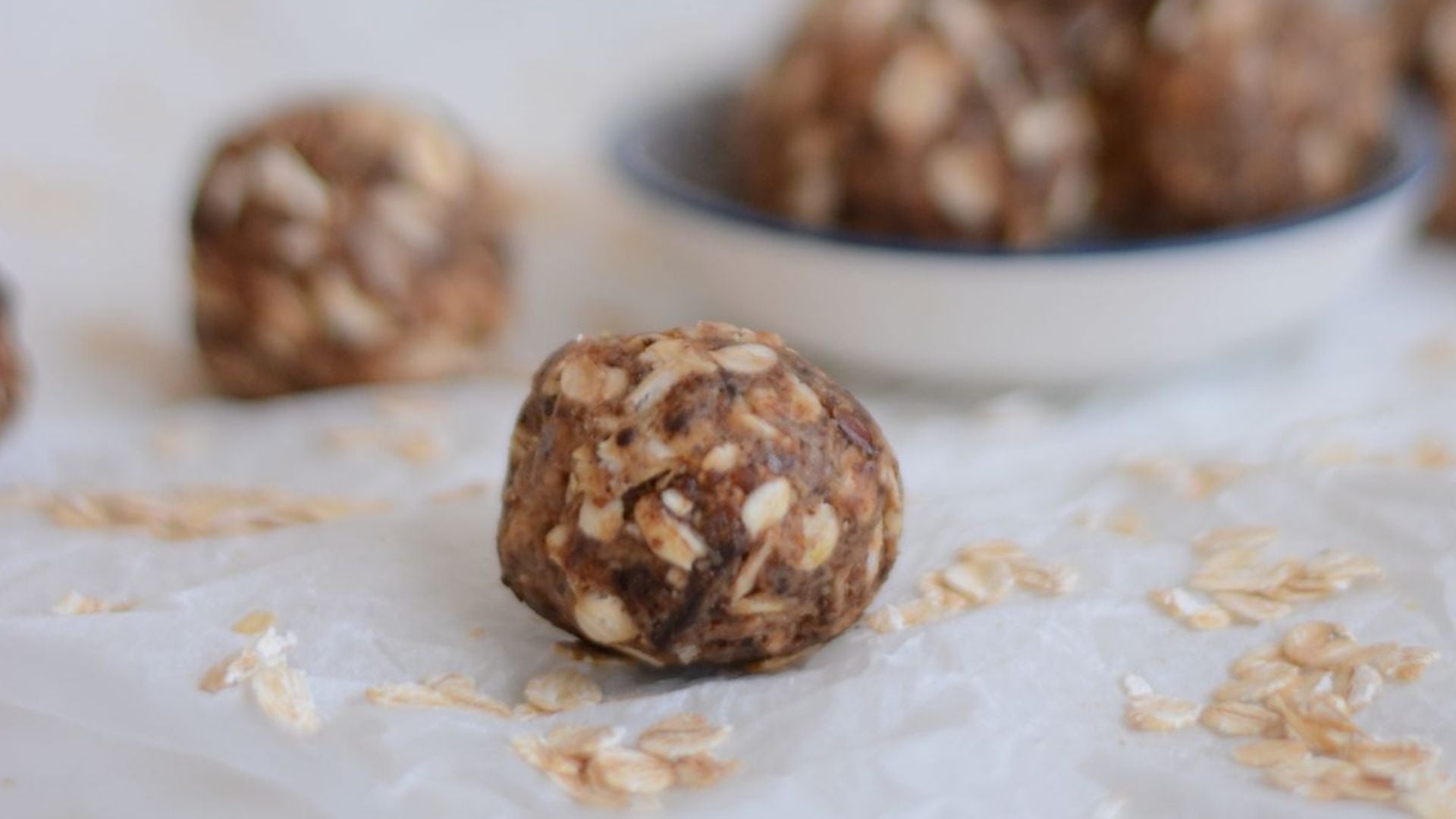
These energy balls came from a restaurant near our home and were one of my favorite grab-and-go breastfeeding snacks on busy days. Made with almond butter, unsweetened chocolate chips, coconut, maple syrup, vanilla, chia seeds and flax seeds, they were rich and satisfying with just a splash of sweetness.
I sometimes make a similar batch at home when I have all the ingredients, but these restaurant ones hit very nicely. And they've stayed in the rotation. Now both of my girls partake, and the three of us share a packet.
Nutritionally, they're a great example of how a snack can be small but substantial. Almond butter and seeds provide fats, protein, fiber, and minerals, while coconut and chocolate add richness and flavor. A little maple syrup brings everything together. During breastfeeding, when my appetite was high and opportunities to sit down for a full meal weren't always predictable, having an energy-dense snack I could eat immediately was especially useful.
11. Manuka honey
Manuka honey was my favorite way to add sweetness to my breastfeeding menu. I love its intense flavor and thick texture, and a small spoonful goes a long way stirred into full-fat Greek yogurt or a cup of herbal tea.
Honey is primarily a source of carbohydrates and natural sugars, with small amounts of minerals and other naturally occurring compounds. Raw Manuka honey in particular is prized for some of its distinctive bioactive components, exhibiting anti-oxidative, anti-inflammatory, immunomodulatory, anti-microbial, and anti-cancer activities.
I always appreciate foods for their health benefits, but when it came to Manuka honey, the sheer pleasure of it mattered more. Adding it to foods scratched the itch for something sweet without leaving me feeling deprived.
For me, that's part of eating well, too. Not every ingredient has to earn its place through an impressive list of vitamins and minerals. Sometimes a little sweetness makes nourishing food more pleasurable, and a small amount of something wonderful is enough.
What these foods have in common
Looking back at this list, one thing stands out: I ate many of these foods a lot. Variety matters for getting a broad range of nutrients, but that doesn't mean every meal, or even every day, needs to look completely different. During busy or overwhelming seasons like early motherhood, having a collection of reliable staples can make eating well considerably easier.
My staples were nutrient-dense, satisfying, and practical. Collectively, they provided plenty of protein, fats, and carbohydrates, along with fiber, vitamins, minerals, and omega-3s. They also gave me a range of flavors and textures.
Most importantly, I actually wanted to eat them. Repetition didn't make my diet feel restrictive; it reduced the work of feeding myself. I knew what I liked, I knew what would satisfy me, and I could keep those foods within easy reach while leaving plenty of room for variety around them.
How food supported my milk supply
My approach to breastfeeding food was holistic: eat enough, stay hydrated, get plenty of variety, and choose nutrient-dense foods whenever possible. Rather than expecting a particular food to produce more milk, I focused on nourishing myself while giving my body what it needed to produce breast milk day after day.
For me, good breastfeeding food offered:
- Enough energy to meet the demands of lactation and motherhood
- Protein, fats and carbohydrates for satisfying, substantial nourishment
- Important vitamins and minerals to support both mother and baby
- Nutrient density and variety to help replenish my own nutritional stores
- Pleasure and practicality, because food still has to work in real life
I did notice one interesting pattern with milk volume. When pumping, I seemed to produce more when I ate meaningful sources of carbohydrates alongside plenty of protein and fat. That's an observation from my own experience, not a promise that the same approach will increase another woman's supply. Some women likewise notice changes with particular foods, herbs, or teas. Every woman's experience is different.
With my first baby, I worried about supply more than I needed to. It turned out I was producing more than enough to keep her growing steadily along her curve, and I pumped morning and night both for bottles and additional breast stimulation.
The breastfeeding relationship I had with my first child continued as she became a toddler, through conceiving my second baby and throughout my pregnancy. By then she nursed only twice and eventually once a day, but breastfeeding remained part of our rhythm.
When my second daughter arrived, her older sister was still nursing as the new baby began her own breastfeeding journey with me. This time, I had an oversupply and never worried about milk production. I rarely pumped unless I needed to leave milk behind.
Good food supported me through all of this, but food was only one part of milk production. Regular nursing and effective milk removal help signal the breasts to continue producing milk. I also prioritized hydration and managing stress. If you're concerned that your baby isn't getting enough milk or that your supply could be improved, a qualified lactation consultant can provide individualized guidance.
Keep nourishing yourself and your babies
Join The Table for practical nutrition ideas, fresh food inspiration, and thoughtful guidance for feeding yourself and your babies well.
Thank you for subscribing!
Have a great day!